Biochar Life

Biochar Life

Phrao District, Chiang Mai, Thailand

Empowering Smallholder Farmers. Healing Our Planet.

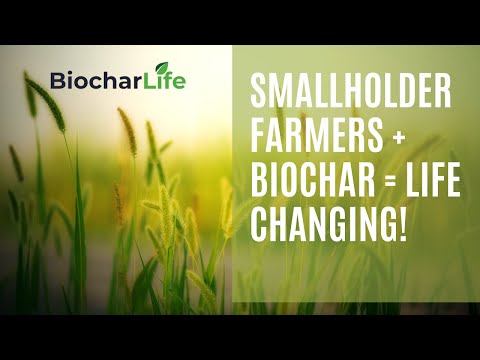
Biochar Life is on a mission to tackle climate change, enhance public health, and alleviate rural poverty by working with smallholder farmers. They train communities in the creation of biochar and help them generate c-sink credits, putting more money back into their hands while making a global impact.
Country: Thailand
Status: Operational
Type: Biochar
Photo: chalyon021

Marine Permaculture by Climate Foundation

Philippines

Marine Permaculture

With kelp’s help, marine ‘permaculture’ (farming in a sustainable and self-sufficient way) has the potential to turn not only the ocean round but the whole planet – because once we grow it at scale, kelp gives with one hand (food, feed, fuel, fertiliser and more) and takes with the other (carbon, out of the atmosphere and upper ocean, storing it safely in the middle and deep ocean for thousands of years).
Country: Phillipines
Country: Tasmania
Status: Operational
Type: Algae sequestration
Photo: chalyon021

Living Carbon

Georgia, USA

Enhancing Natural Systems

Living Carbon’s advanced biotechnology can help provide solutions to efficiently remove carbon from our atmosphere. Their biotech seedlings are unique in their ability to capture more carbon on less land and they utilize land that is already abandoned or degraded, like abandoned mineland or agricultural land. This means emissions will not go elsewhere, and land use change is limited.
Country: United States
Status: Operational
Type: Plant Sequestration
Photo: chalyon021

TCHAR

Taipei City, Taiwan

Recycling of household sewage sludge and waste biomass.

Through TCHAR’s carbon dioxide removal plants, industrial companies, agriculture and wastewater treatment companies in every region can convert their waste into biochar on-site, while generating renewable energy.
Country: Taiwan
Status: Operational
Type: Biochar
Soil Quest

Soil Quest

Canowindra NSW, Australia

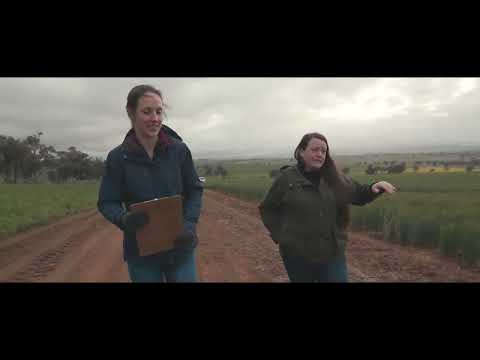
Farmers and scientists transforming agriculture into a Gigaton Carbon Drawdown industry.

The SoilCQuest team work closely on the ground with landholders, understanding the day-to-day farm culture, the drivers and barriers to innovation in agriculture. SoilCQuest has an audacious vision to help double the world’s on-farm carbon stocks by 2031, so that farmers and our planet can thrive.
Country: Australia
Status: Operational
Type: Organic Soil Carbon
Biosorra

Biosorra

Nairobi West, Nairobi, Kenya

Provides biochar as affordable & sustainable fertiliser to farmers across Sub-Saharan Africa.

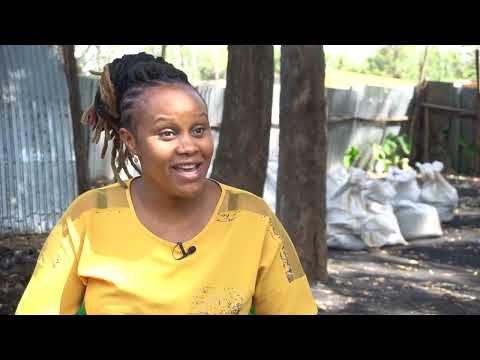
Biosorra makes biochar and then provides it as an affordable and sustainable biofertilizer to farming communities in sub-Saharan Africa. For every tonne of biochar placed on fields, 2.5 tonnes of carbon dioxide is removed from the atmosphere. At scale, this has the potential to remove millions of tonnes of carbon dioxide.
Country: Kenya
Status: Operational
Type: Biochar
Safi Organics

Safi Organics

Nairobi, Kenya

Decentralised production of carbon-negative fertiliser from rice-husks.

Safi Organics utilizes rice husks to make biochar that is also used as a carbon-negative organic fertilizer. Its biochar fertilizer has been used by more than 10,000 farmers since its inception, resulting in a 30% increase in crop yield and a 50% increase in farmer income. Currently sequesters around 33,000 tonnes of carbon dioxide annually, with the potential to sequester millions more.
Country: Kenya
Status: Operational
Type: Biochar
Climeworks

Climeworks

Naivasha, Kenya

Plans to open a Kenyan Plant by 2030.

Climeworks uses direct air capture technology to sequester carbon dioxide. Their pilot facility in Iceland has partnered with Carbfix to capture and store more than 4,000 tonnes of carbon dioxide in volcanic basalt rock. They also recently announced plans for a Kenyan Plant that will capture and store over a million tonnes of carbon dioxide annually in partnership with Great Carbon Valley.
Country: Kenya
Status: Operational
Type: Direct Air Capture
Varaha

Varaha

Gurugram, Haryana, India

World’s first climate teech company focused on developing economies.

Varaha is a global tech-enabled carbon project developer, dedicated to implementing nature-based solutions while maintaining an unwavering commitment to smallholder farmer development and excellence in monitoring, reporting, and verification (MRV) practices. Varaha’s projects have proven their effectiveness in removing and preventing the release of over 1 million tonnes of CO2 emissions within a remarkably short span of just 16 months since our inception.
Country: India
Status: Operational
Type: MRV
Takachar

Takachar

Dehradun, Uttarakhand, India

Turns waste-biomass into carbon-negative bioproducts.

Takachar develops small-scale, low-cost portable equipment to convert waste biomass into carbon-negative bioproducts. Takachar-produced biochar already improves crop yields, while its operations are providing new rural livelihoods. It has the potential to remove 2.4 gigatonnes of carbon dioxide a year at scale.
Country: India
Status: Operational
Type: Biochar